 Google Ads
 Meta Ads
 Email marketing
 Lightspeed eCom Toolkit
 Shopify Toolkit
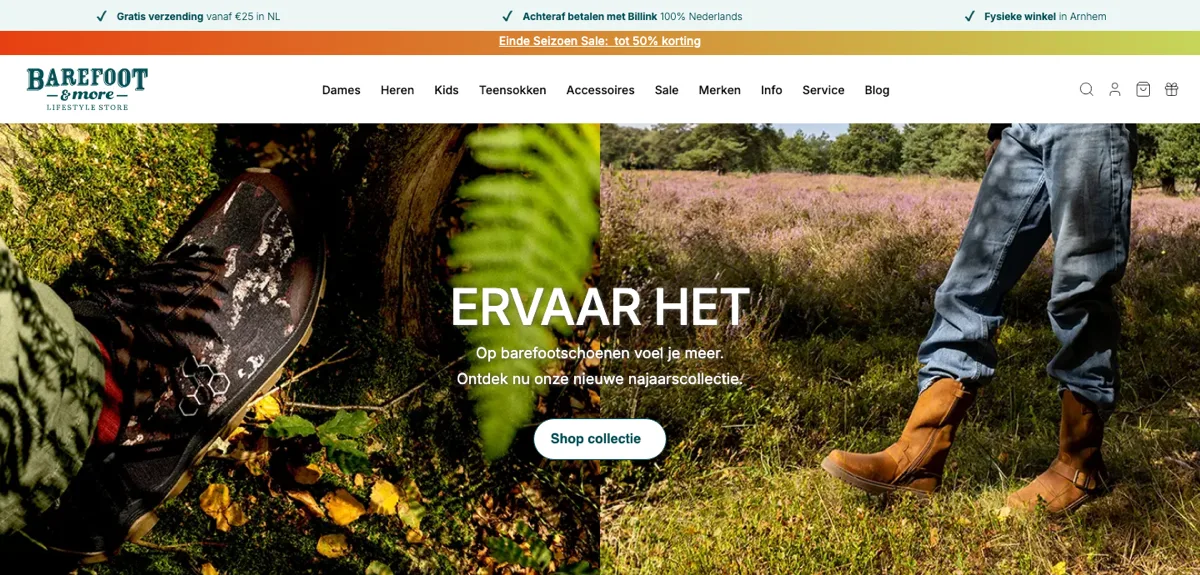
How advertising built a multimillion-euro business
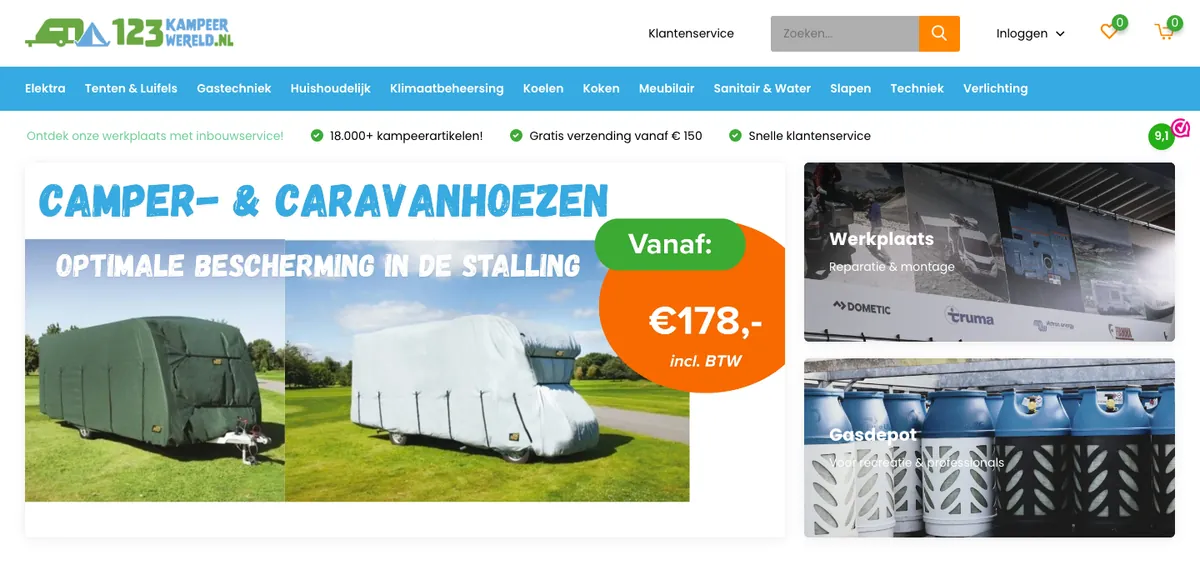
Vincent once literally walked into our office in the Delftse Poort in Rotterdam barefoot. Likable, but not a match yet: the foundation of the store simply wasn't ready to scale marketing seriously.
Months later he came back, this time with the right foundation in place. What followed was no accident, but controlled growth from a small online store into a multimillion-euro e-commerce business, market leader in the Benelux and winner of multiple awards. In this case, we show how targeted advertising fueled that growth.
Deliberate choices in bidding and visibility
We set up Google Ads with a clear structure: branded and non-branded campaigns strictly separated. That let us steer as precisely as possible on intent, returns and scale, without wasting budget.
On branded keywords, we deliberately went in aggressively. When someone searches for a specific brand, you want to be fully present. This traffic converts best and deserves maximum visibility. There, the focus was on volume and efficiency.
At the same time, we also competed on broader, non-branded search terms, but with a different approach. No all-out bidding here, but controlled participation. Less aggressive, more tightly steered on returns, and focused mainly on building new volume without putting pressure on profitability.
This approach delivered nearly 18,000 orders and €2.68 million in revenue, on an investment of €207,000. That added up to a ROAS of 1,294%. Google Ads stopped being a cost and became a predictable, scalable revenue channel.
How we approach Google Ads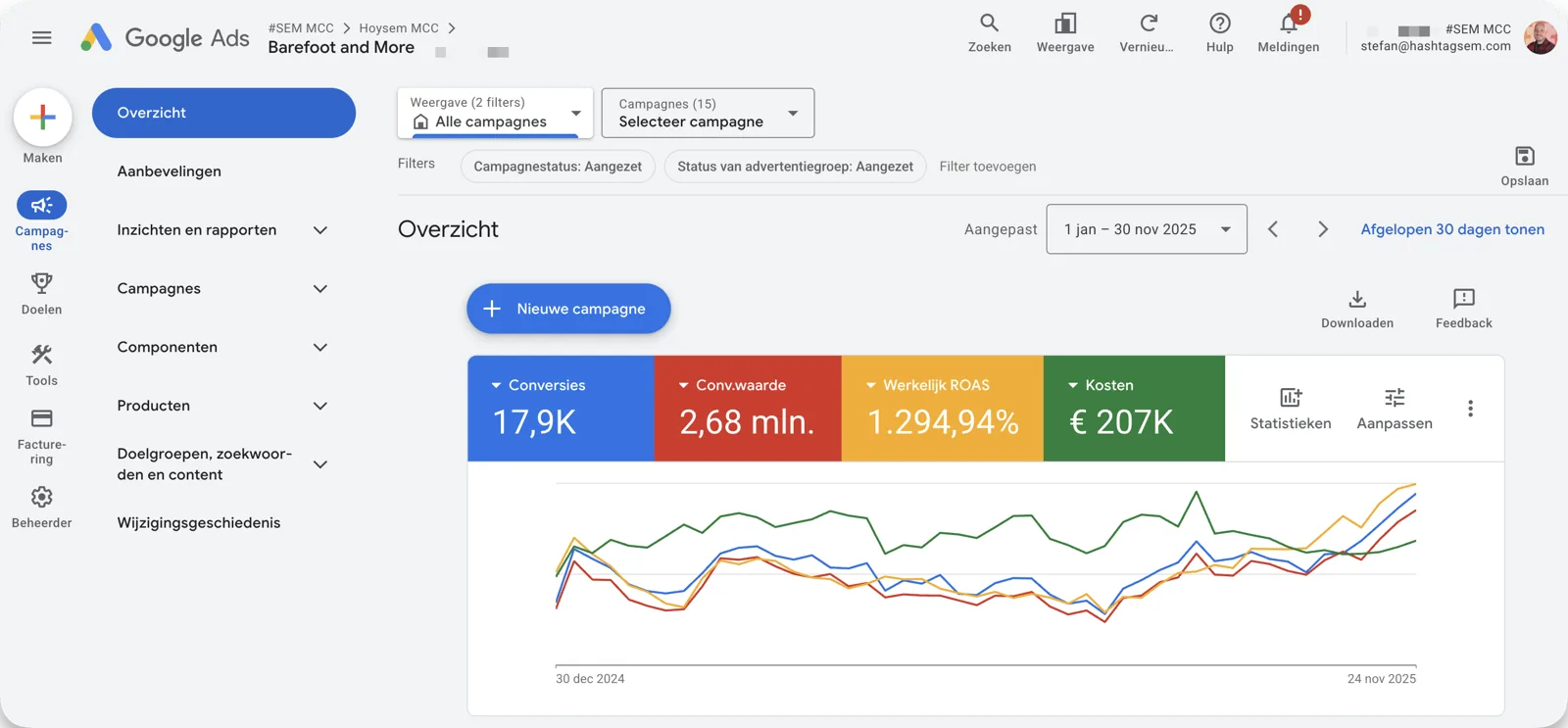
What was once a limitation became a growth accelerator
On Meta, you used to be able to easily target people who were already interested in barefoot shoes. Over the years, that game has changed. Audiences got broader, interest targeting got less precise, and Meta itself mostly got better at making money. For us, that wasn't a problem, but an opportunity.
Instead of getting stuck in ever-smaller audiences, we used Meta Ads the way the platform is meant to be used today: broader targeting, a stronger focus on creative, and letting data decide what works. No clinging to old targeting structures, but giving the algorithm room while keeping control over returns ourselves.
It paid off. With a total investment of €201,091, the Meta Ads campaigns delivered 18,471 orders and €3,005,755 in revenue. The average ROAS came in at 1,495%, with peaks of 2,396%.
What started as a necessity became a growth accelerator. By daring to go broader, Meta Ads didn't just scale in volume, it also stayed consistently profitable. That's how a tricky development turned into a clear advantage.
How we approach Meta Ads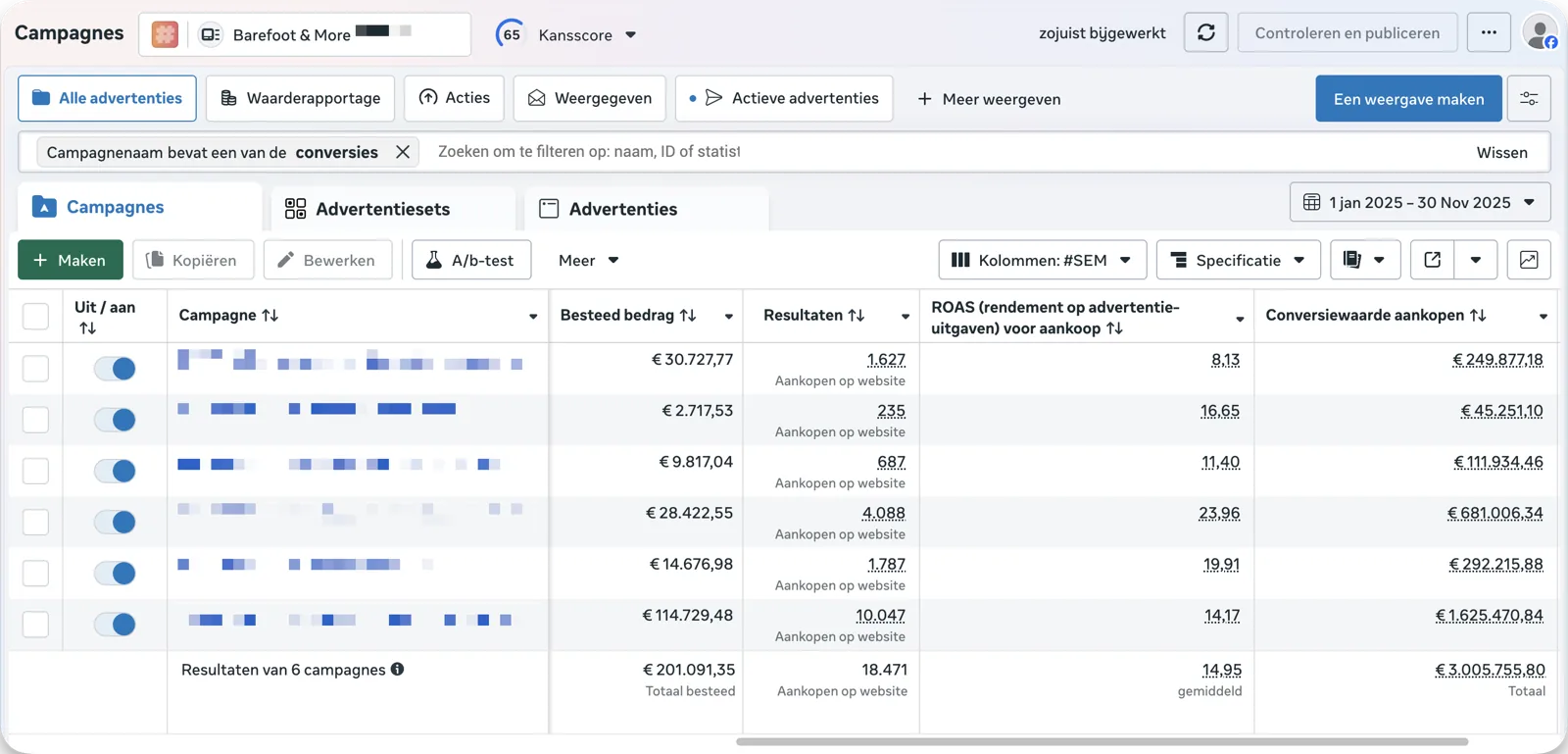
From brand-level to full market coverage in Google
In the first few years, the focus was deliberately on brand level. Visibility for brands, putting structure in place and building a solid foundation. No rush, just making sure everything was right before scaling up.
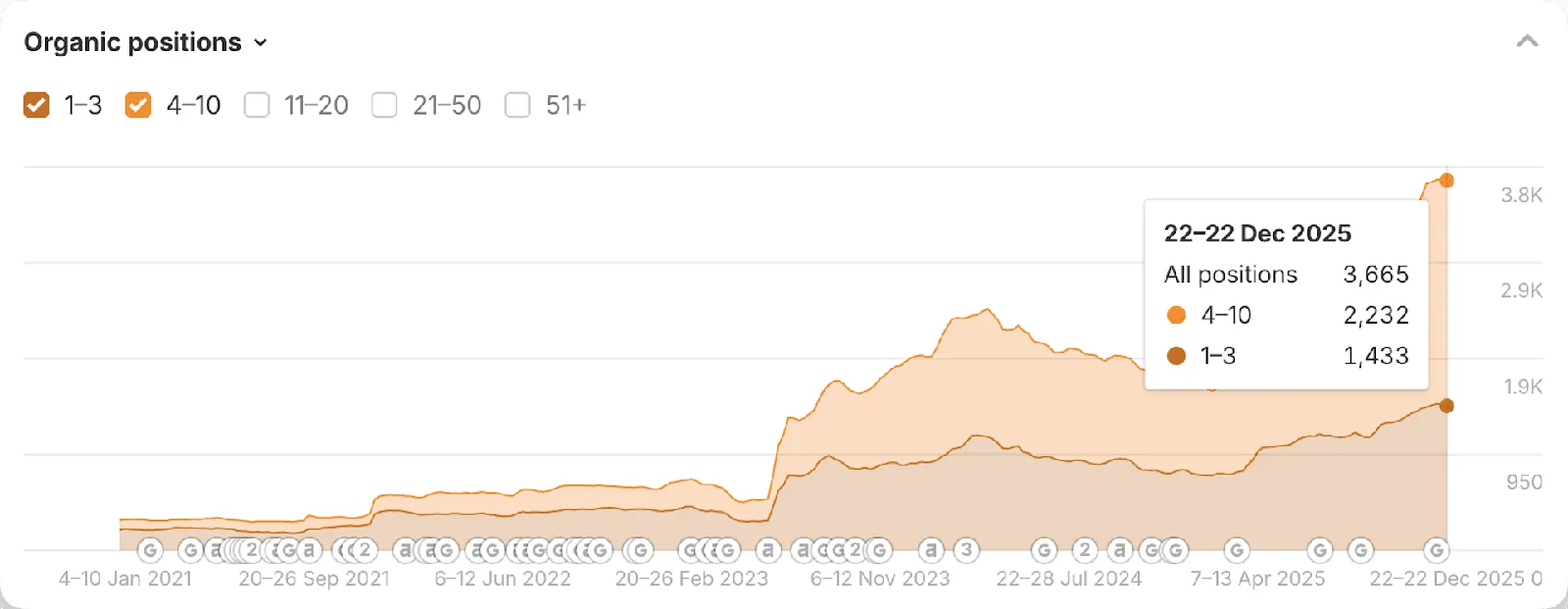
Since 2023, we've intensified the partnership and shifted the focus to broad, competitive search terms. No longer just being found for brand names, but being present across the entire playing field. With content, technical SEO and authority, SEO became a true growth accelerator.
That led to explosive growth in Google. Today, 1,433 keywords rank in the top 3, and we count a total of 3,665 keywords on page 1. Not a snapshot, but the result of steady building and daring to scale. SEO stopped being a supporting channel and became a dominant source of visibility and growth.
How we approach SEO